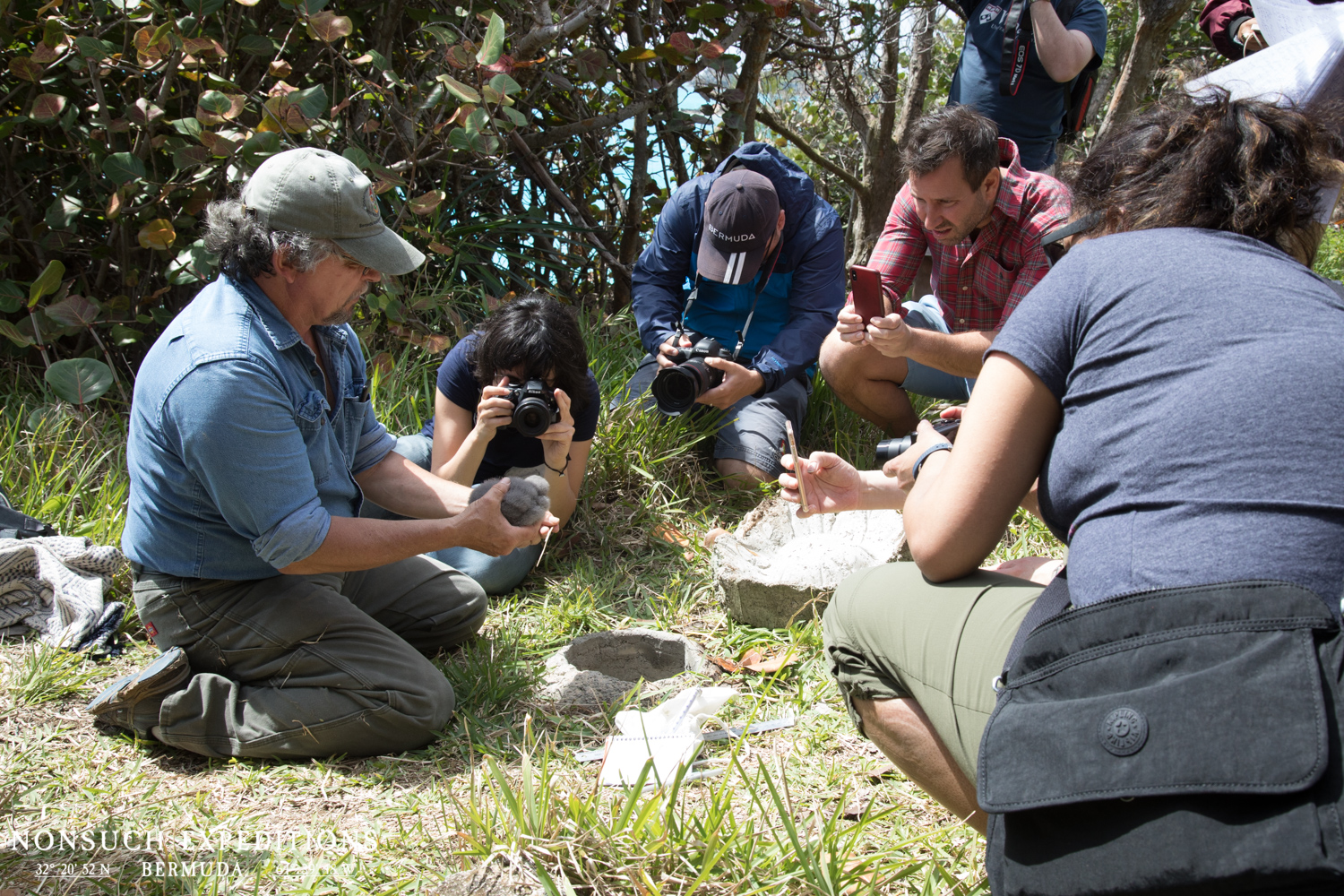
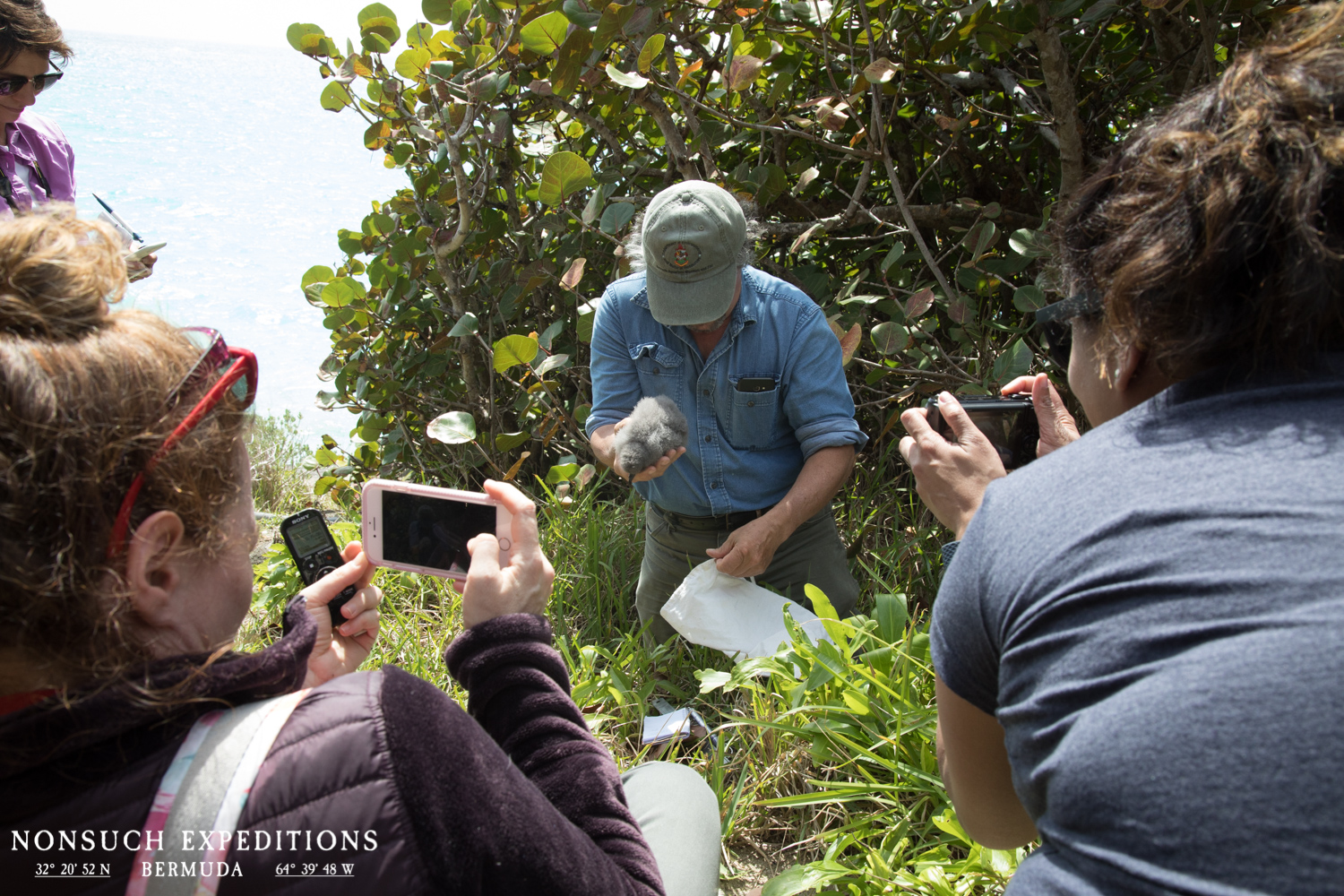
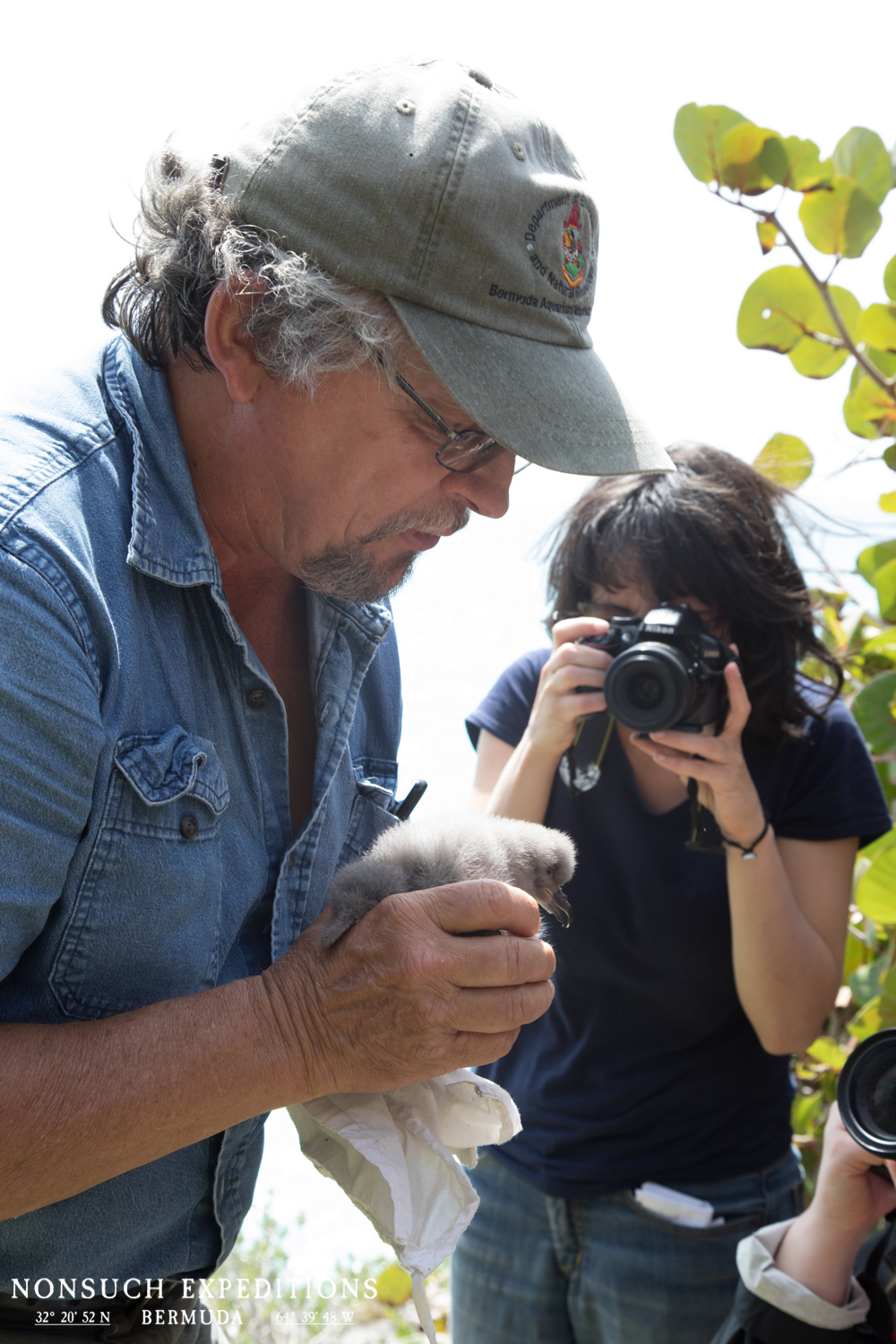
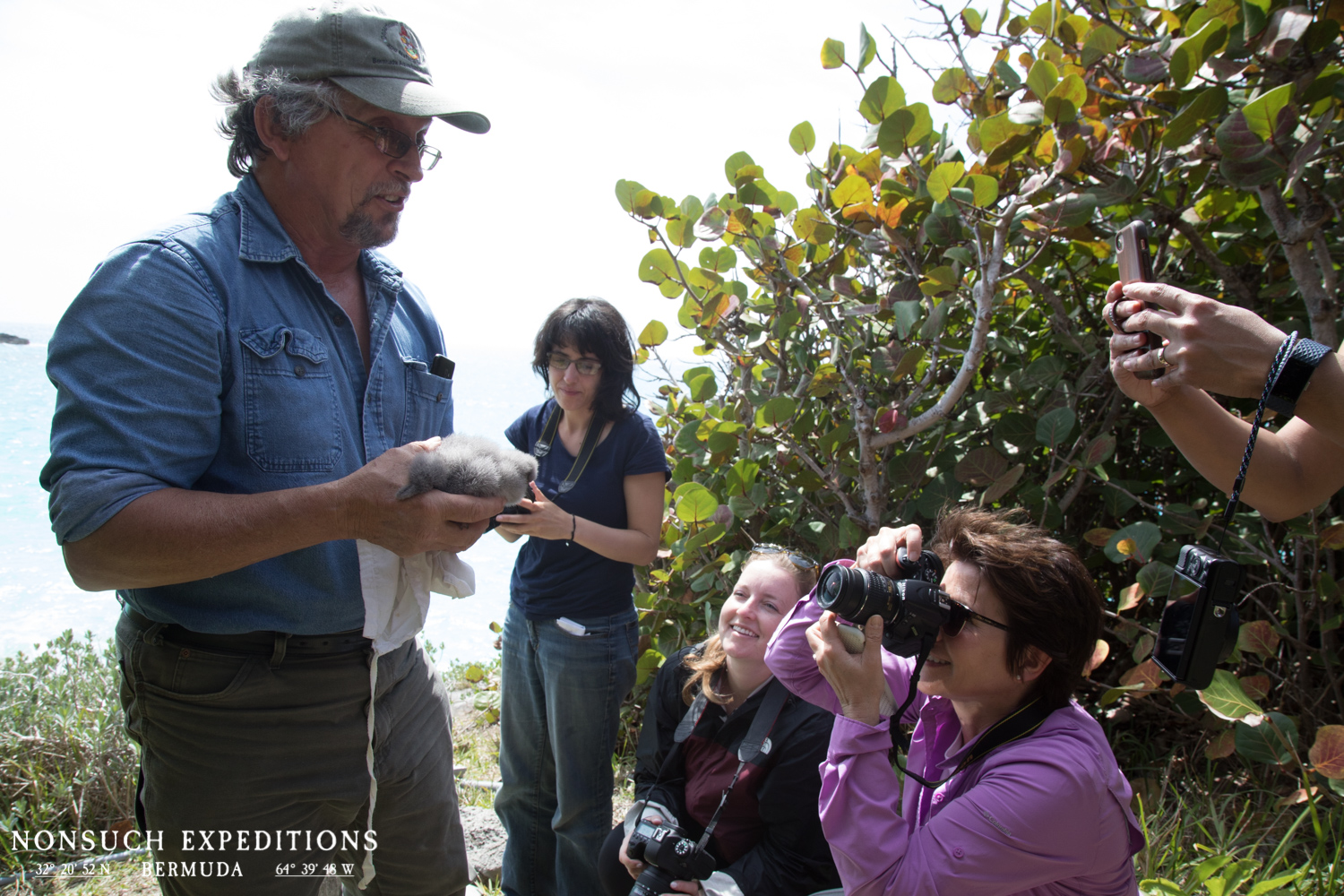
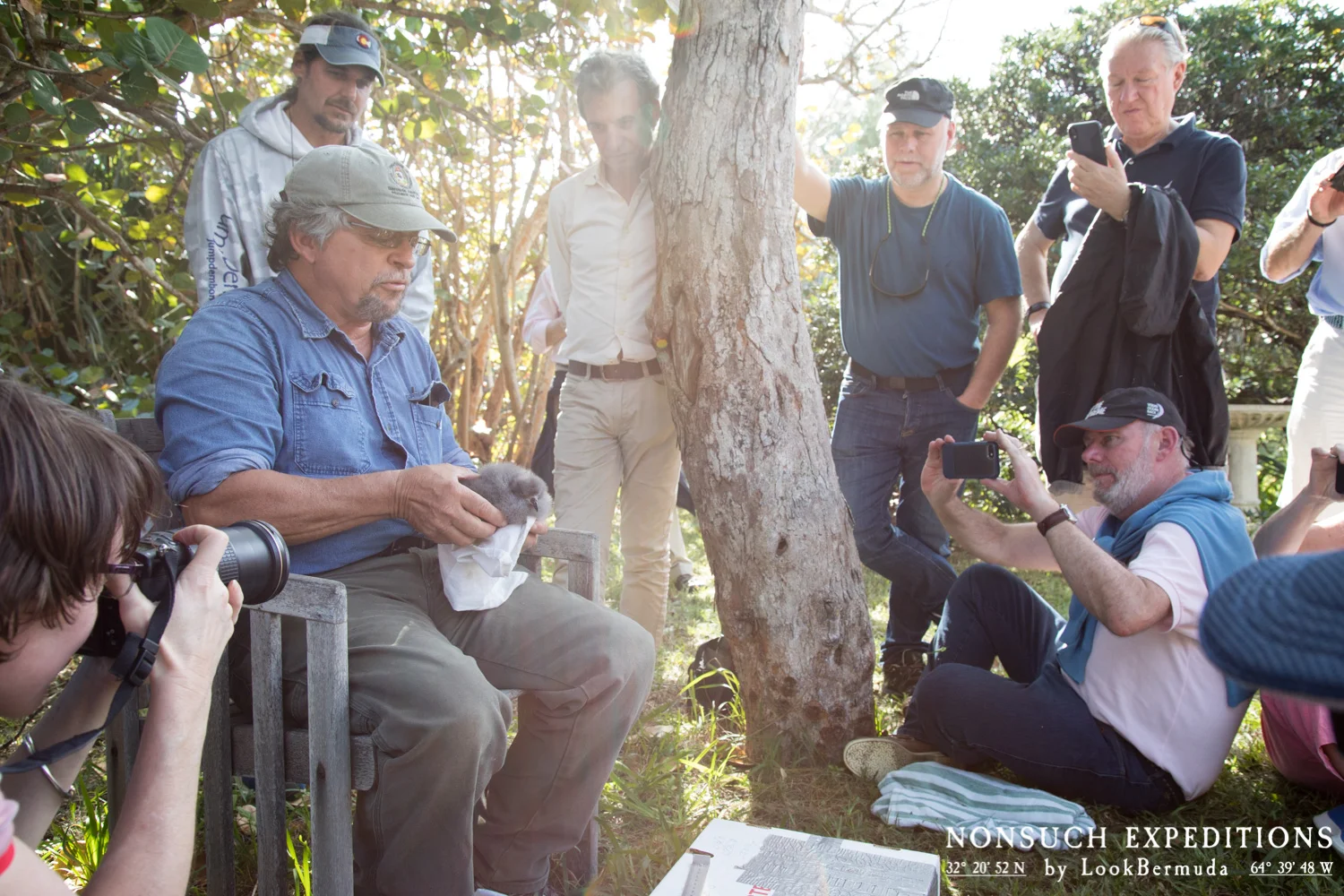
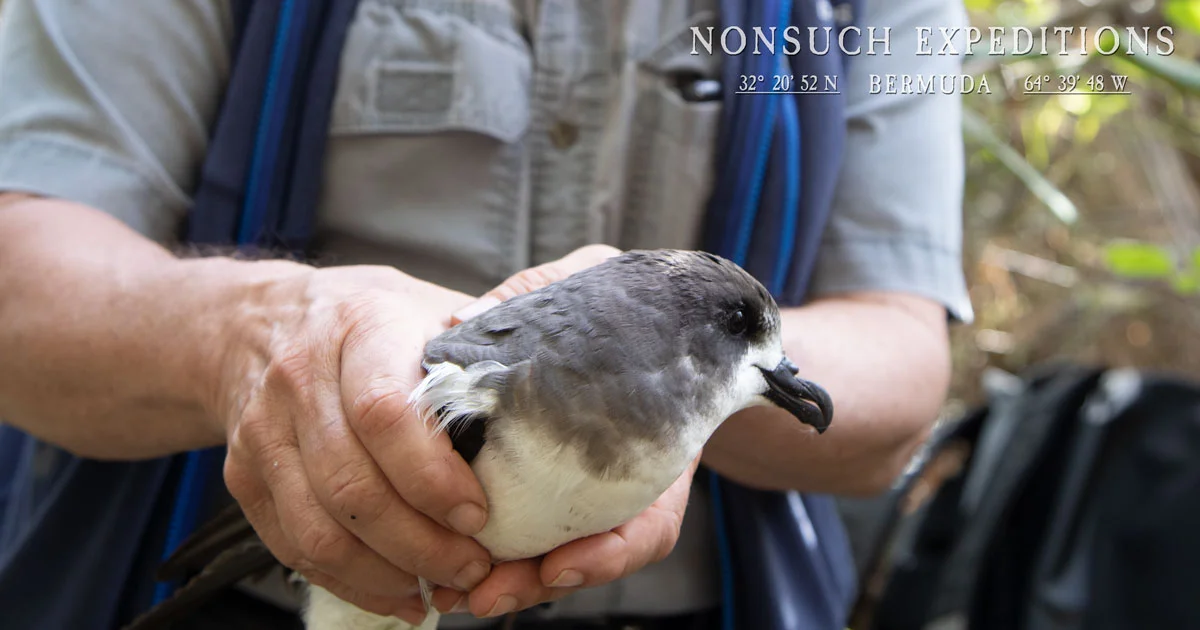
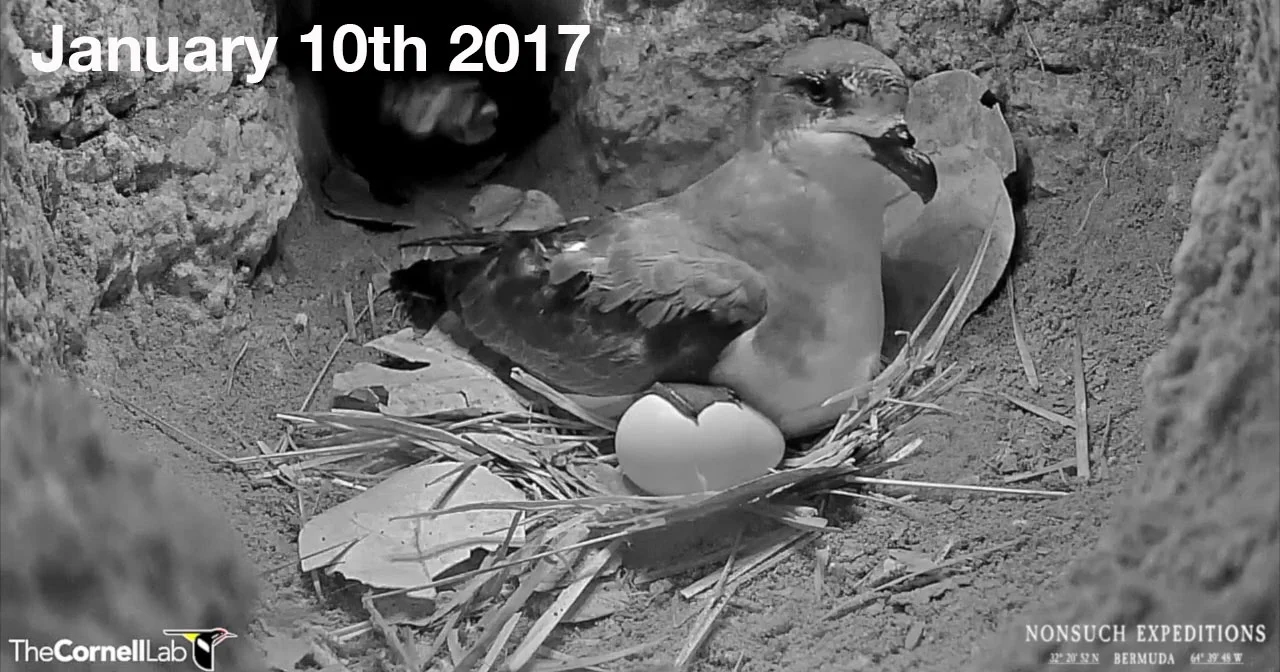
As a result, it looked like 2018 would exceed 2017’s record of 117 breeding pairs and 61 successfully fledged chicks, and by the end of January, a total of 124 breeding pairs had been confirmed as laying eggs. During January and February, Carla Marquardt volunteered to candle all accessible eggs during my routine band checks and weighing of incubating adult Cahows, when adults are briefly removed from burrows for identification and a check of body condition. Candling is a technique used to determine if an egg is fertile and to follow development of the embryo inside the eggshell, proving to be of such value that it will be incorporated into future management of the species.
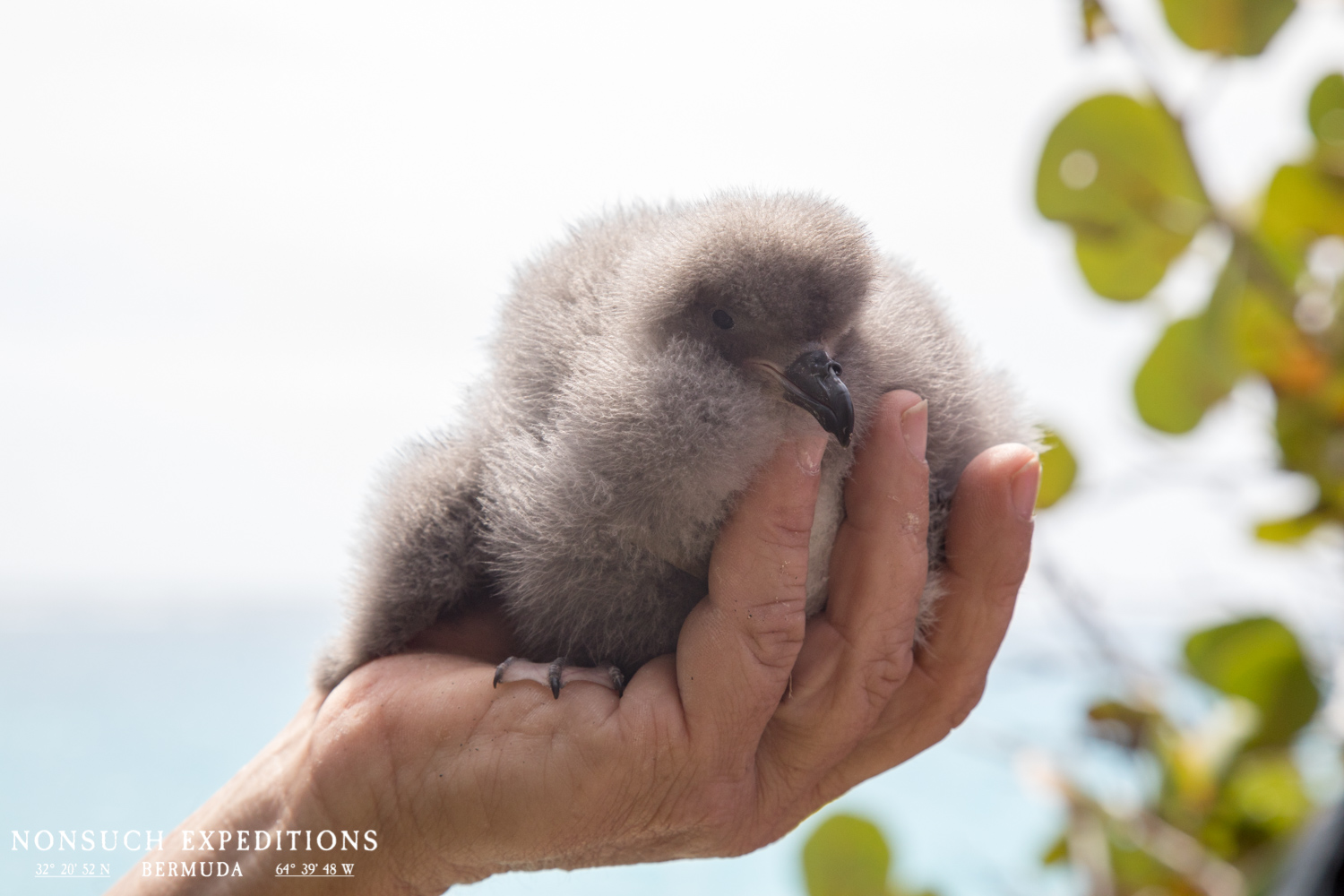
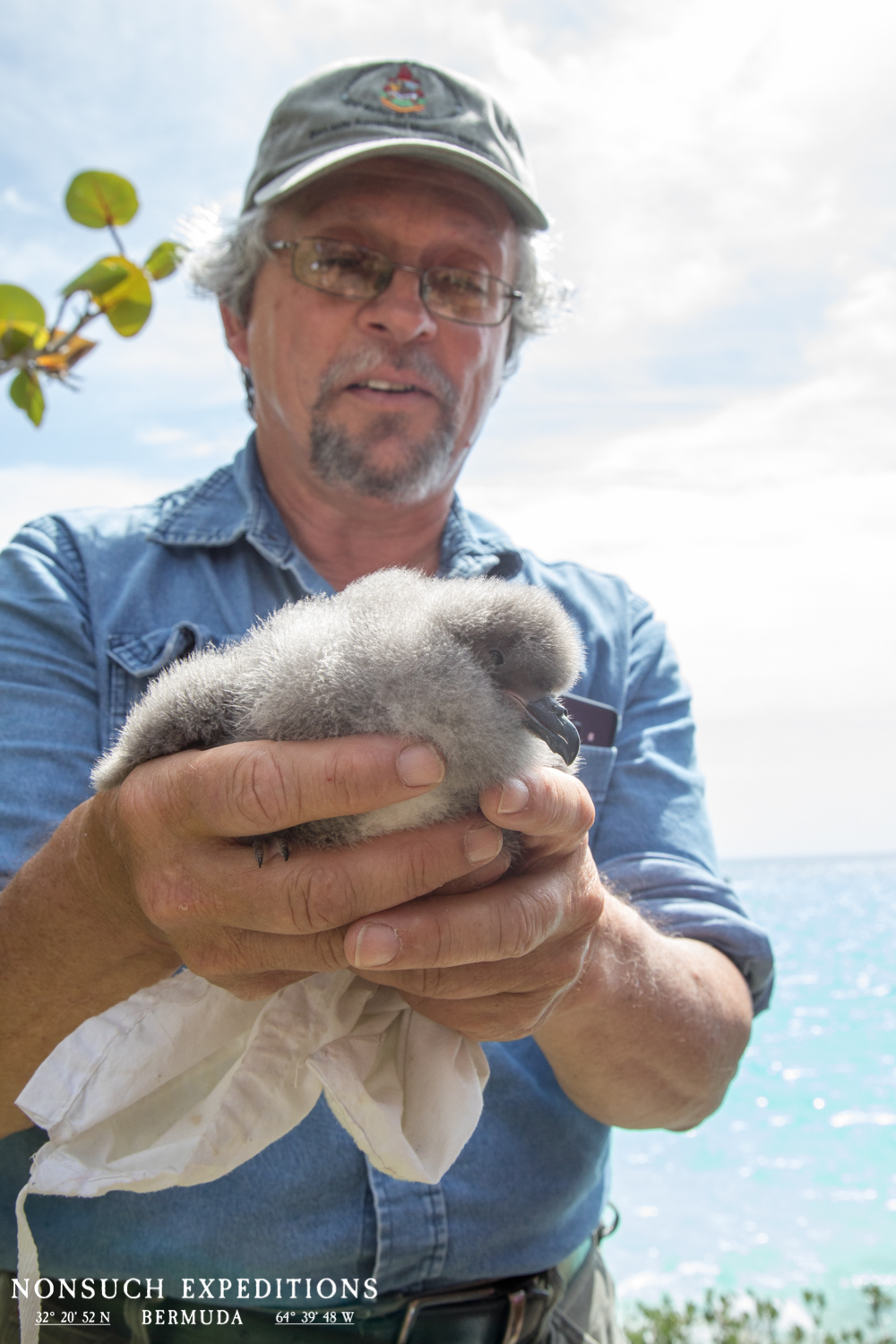
The chicks hatched in late February and early March and then spent three months developing inside their underground burrows, being supplied by the adults with squid, fish and shrimp-like crustaceans. By the time the last chick flew out to sea on 28th June, it was confirmed that 71 chicks had successfully fledged, breaking last year’s record number by 10!
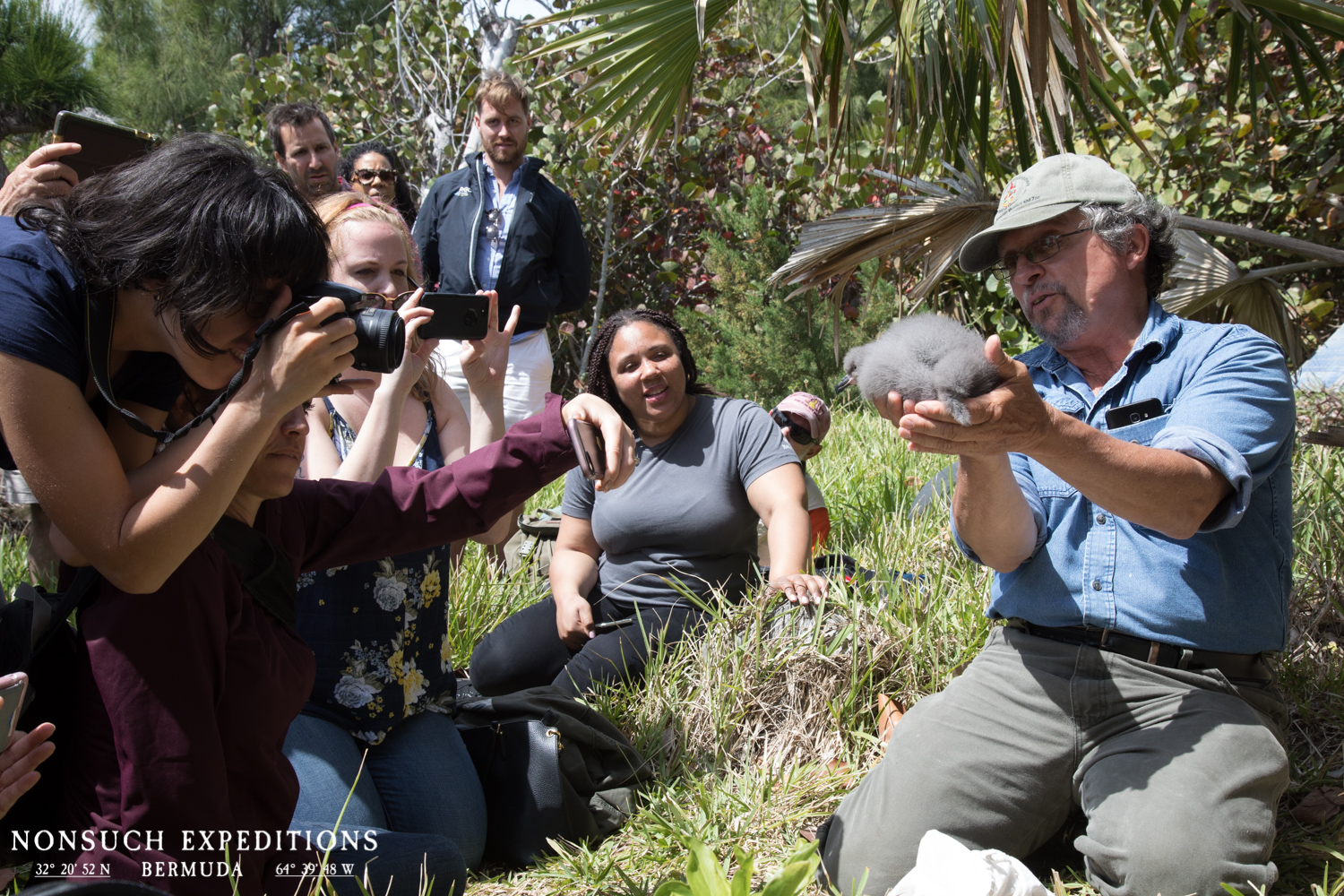
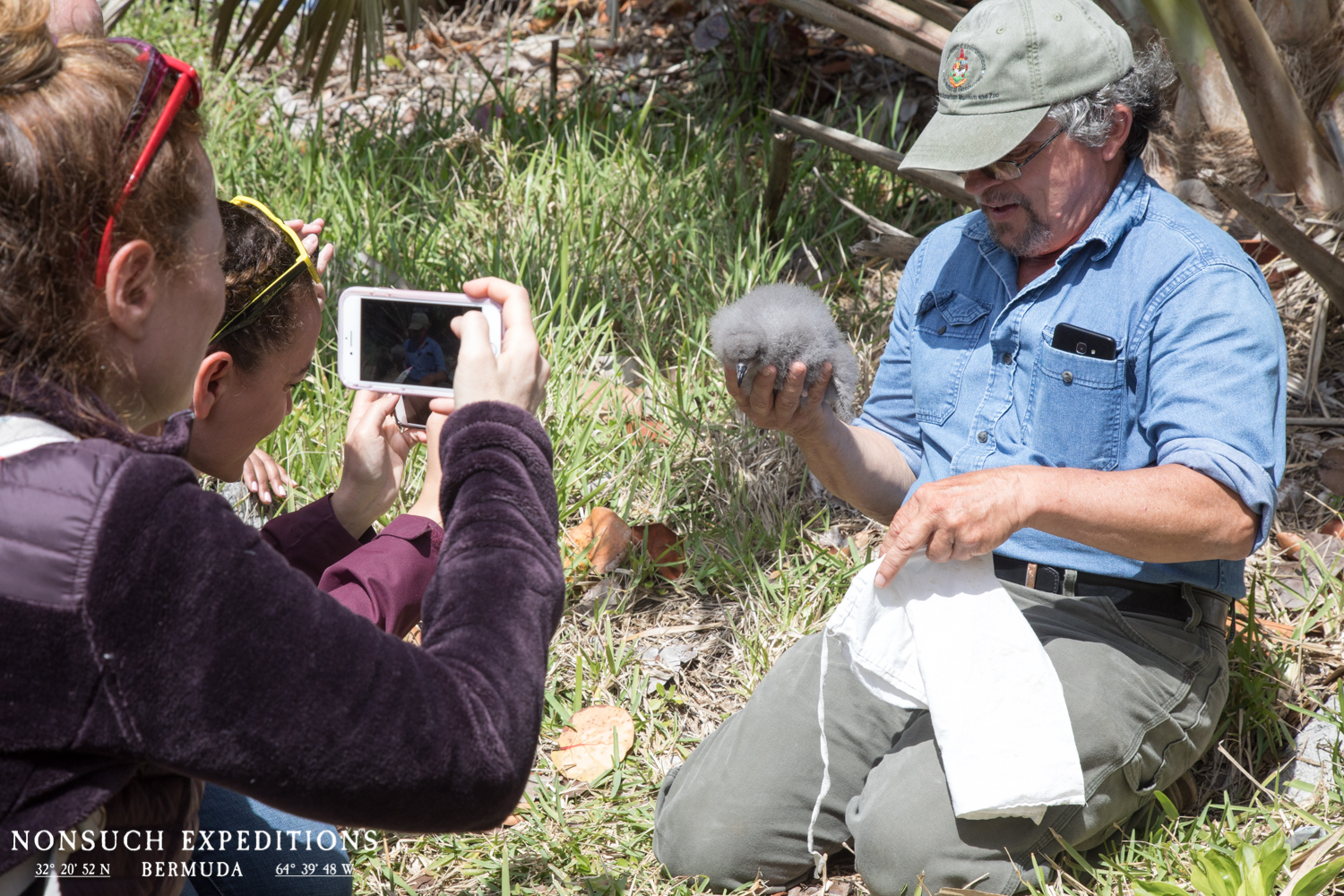
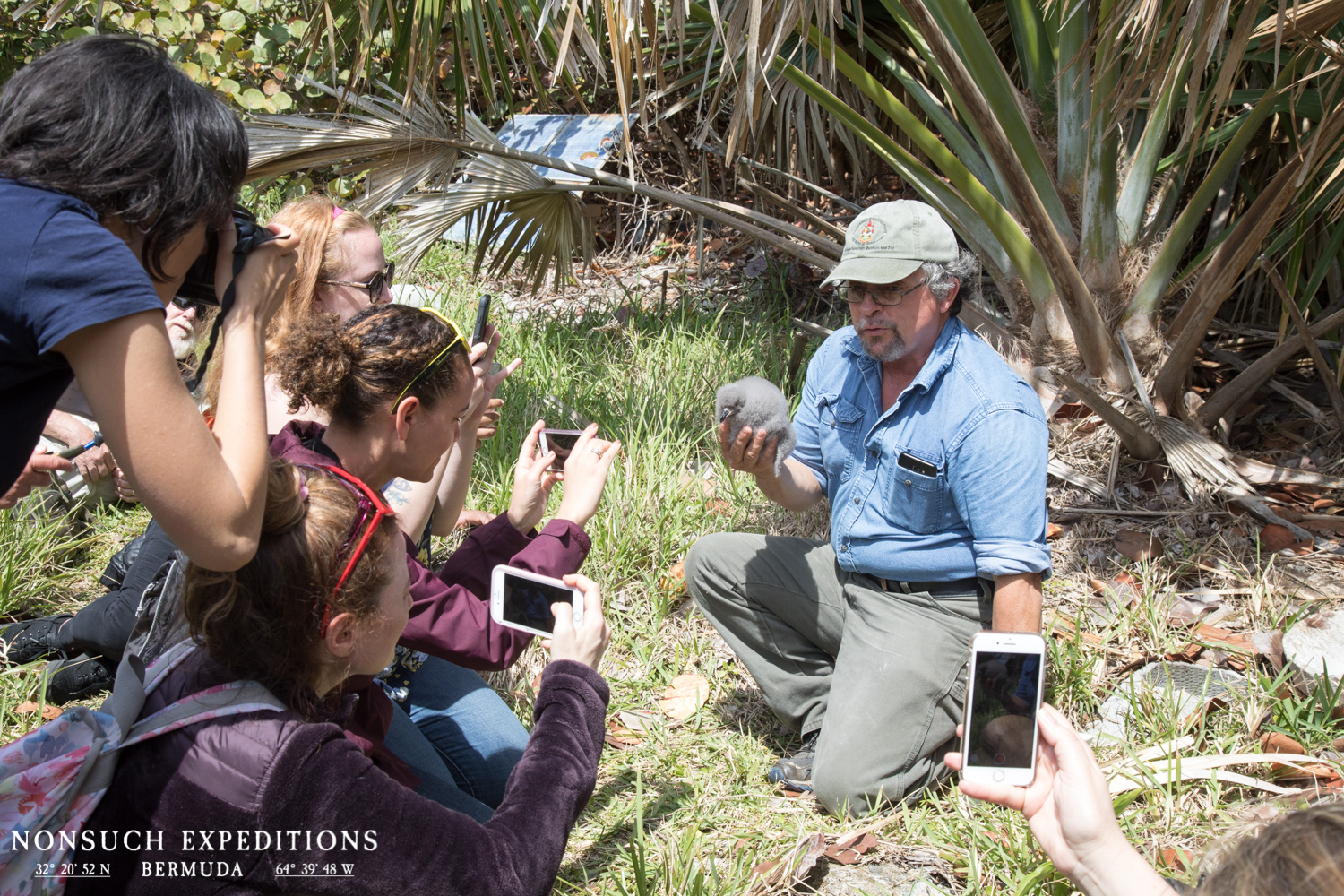
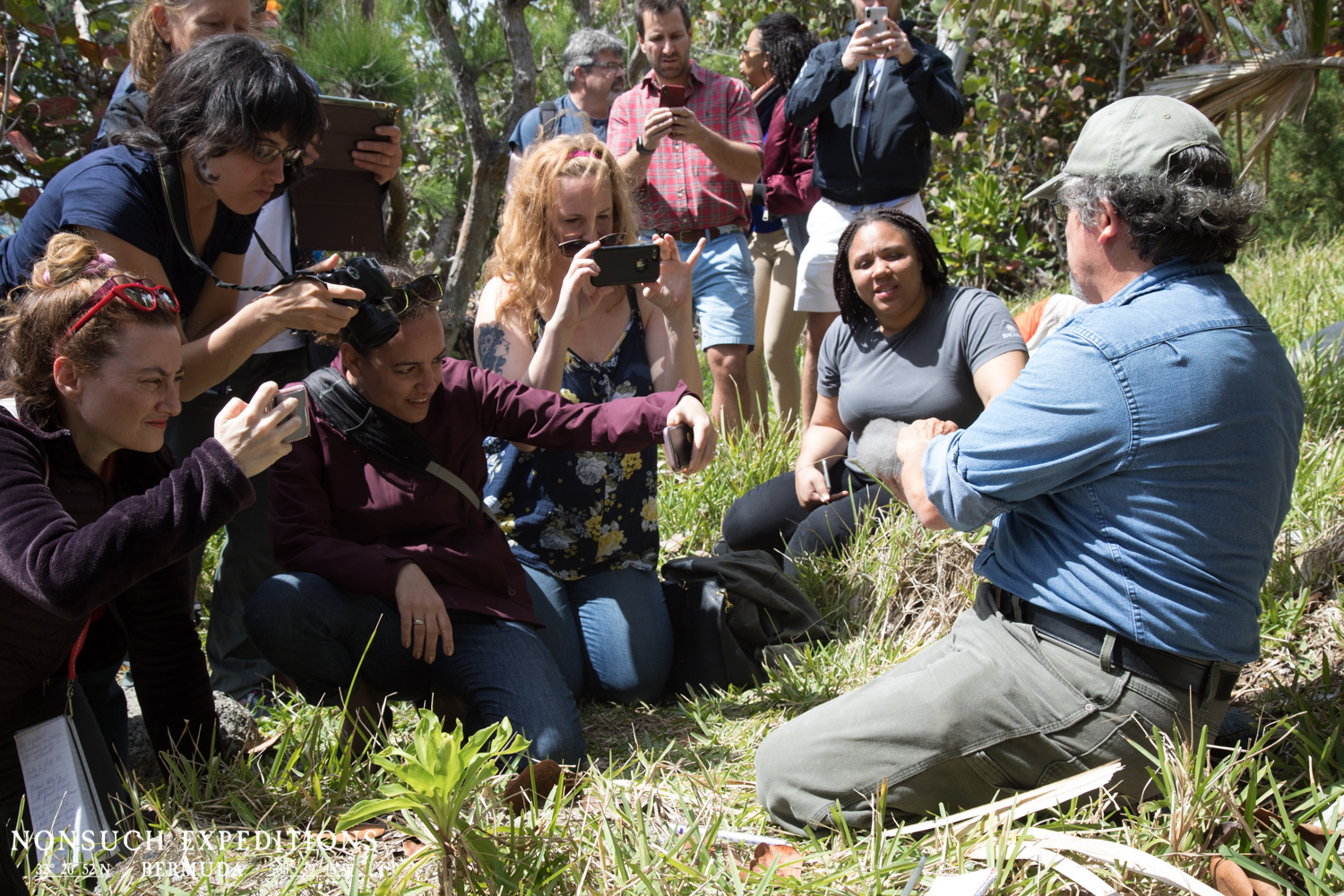
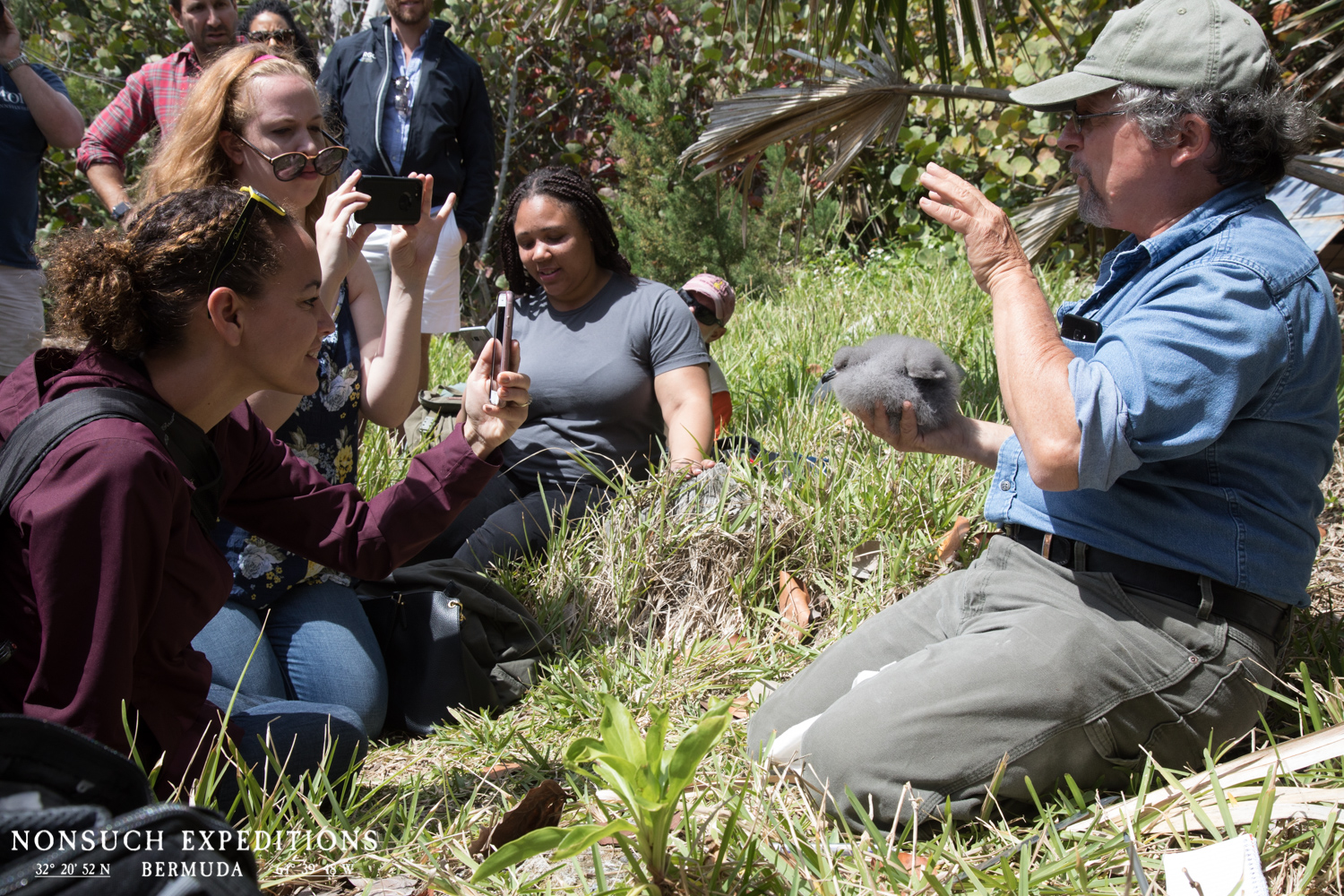
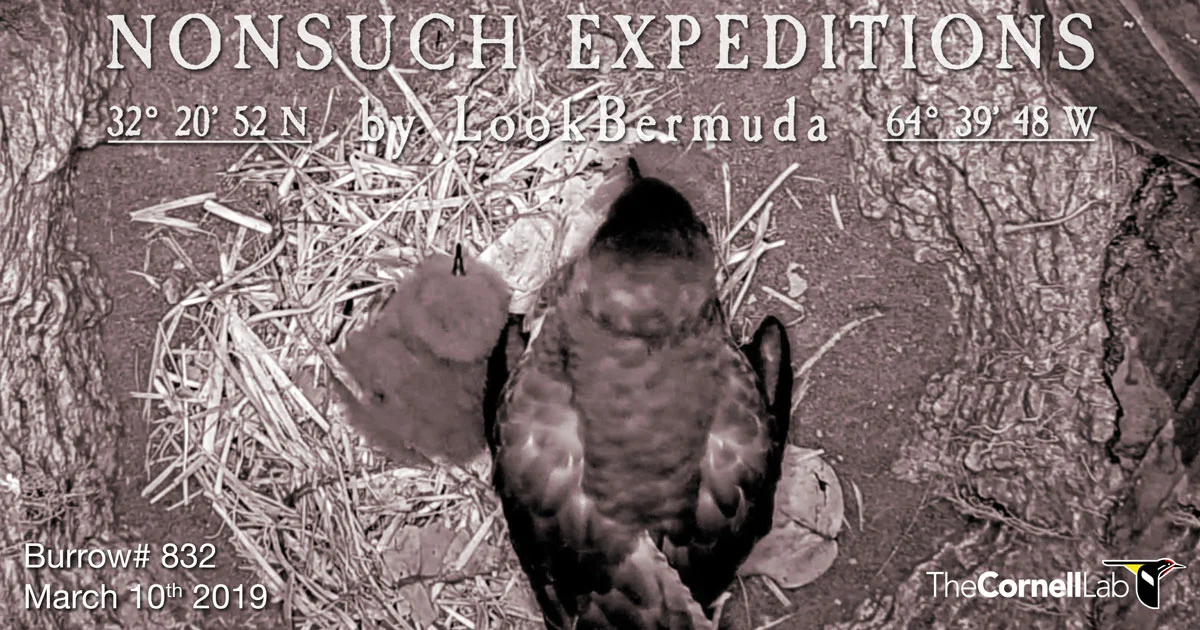
The two new nesting colonies on Nonsuch Island, established by translocating chicks from the original, smaller nesting islets during 2004-2008 and 2013-2017 now both have breeding Cahow populations, with a total of 18 breeding pairs. These produced a record number (for Nonsuch) of 13 fledged chicks, including “Sunny”, 2018’s “CahowCam” chick, the hatching, development and fledging of which was again live-streamed by infra-red video over J. P. Rouja’s “Nonsuch Expeditions” website and the Cornell Lab of Ornithology’s Bird Cams project, enabling viewers in over 100 countries to follow the story of “Sunny’.
In addition, 2018 saw the first two breeding pairs establish at the second, “B” translocation colony on Nonsuch. One of these pairs consisted of a male bird translocated as a chick to the “B” site in 2014, with the female being “Backson”, the first ‘cahow-Cam” chick which fledged from the “A” site in 2013. Five additional pairs also were prospecting nest burrows at both sites during the season, and hopefully will lay their first eggs as breeding pairs next year.
It appears that the Cahow has now reached a point in which its population recovery has accelerated over the last few years. This is due to the intensive management programme, which has been able to control or reduce most of the ongoing threats facing the species, coupled with the re-introduction of the Cahow to a larger, managed habitat on Nonsuch, with room for population growth without the annual threat of hurricane damage or destruction of the nest burrows.
It should be noted, however, that 124 pairs are still a tiny overall population, and the cahow remains one of the rarest seabirds on the planet. The long-term objective of the Recovery Program is increasing the Cahow population to a minimum of 1000 breeding pairs, which will be needed to de-list the species from “Critically Endangered” to “Threatened”. We still obviously have some way to go, but the future looks increasingly positive for this symbol of Bermuda’s Natural Heritage.
Jeremy Madeiros | Senior Terrestrial Conservation Officer | Dept. of Environment and Natural Resources | Bermuda Government
NB: This article is copyrighted, please contact us via the form above for permissions to quote from it along with supporting imagery etc.