• Blog
  • OurOcean
    • The Nonsuch Expeditions
    • > BioQuest / Genomics
    • > Station-B
    • > Bermuda Petrel BioMonitoring Project
    • > Nonsuch Ocean Plastics Project
    • > Message in a Bottle
    • > Bermuda Whale Song Project
    • Sign Up to Newsletter for Tour notification
    • - Section Under Construction
    • > National Geographic Open Explorer
    • > Sargasso Sea Expeditions
    • 2019 Cahow GPS Tracking Expedition
    • > 2016 Photography Expedition
    • > 2016 Pilot STEAM Program
    • > 2016 STEAM Award
    • |
    • Gallery
    • 2016 Airport Art Installations
    • Blog > Photography
    • Private Terminal Installation
    • Airport Art Press Release
    • Photography Video Loop
    • Plastics
    • > LIVE | 2025>2026 CahowCam
    • Blog > 2025/26 Season
    • Cahow FAQ
    • Audubon Magazine Cover
    • Audubon CahowCam Article
    • > Whale Song Project
    • Press
    • > LIVE | Tropicbird / LongTail Cam
    • Stormy
    • Cornell Partnership
    • Cornell CahowCam Page
    • 2021 CahowCam Archive
    • 2020 CahowCam Archive
    • 2019 CahowCam Archive
    • 2016 -2018 CahowCam Archive
    • 2017 Breeding Season Summary
    • Nonsuch Virtual Tour
    • Blog > Technical Notes
    • CahowCam Project
    • Cahow Translocation Film
    • Cahow History
    • Recovery Program
    • EDU
  • |
  • History
  • Contact
  • Newsletter
    • Aluminum Prints
Menu

The Nonsuch Expeditions

64° 39' 48 W | 32° 20' 52 N
City, State, Zip
64 39 48 W 32 20 52 N
by LookBermuda

Your Custom Text Here

The Nonsuch Expeditions

  • Blog
  • OurOcean
  • Expeditions
    • The Nonsuch Expeditions
    • > BioQuest / Genomics
    • > Station-B
    • > Bermuda Petrel BioMonitoring Project
    • > Nonsuch Ocean Plastics Project
    • > Message in a Bottle
    • > Bermuda Whale Song Project
    • Sign Up to Newsletter for Tour notification
    • - Section Under Construction
    • > National Geographic Open Explorer
    • > Sargasso Sea Expeditions
    • 2019 Cahow GPS Tracking Expedition
    • > 2016 Photography Expedition
    • > 2016 Pilot STEAM Program
    • > 2016 STEAM Award
    • |
    • Gallery
    • 2016 Airport Art Installations
    • Blog > Photography
    • Private Terminal Installation
    • Airport Art Press Release
    • Photography Video Loop
    • Plastics
  • CahowCams etc.
    • > LIVE | 2025>2026 CahowCam
    • Blog > 2025/26 Season
    • Cahow FAQ
    • Audubon Magazine Cover
    • Audubon CahowCam Article
    • > Whale Song Project
    • Press
    • > LIVE | Tropicbird / LongTail Cam
    • Stormy
    • Cornell Partnership
    • Cornell CahowCam Page
    • 2021 CahowCam Archive
    • 2020 CahowCam Archive
    • 2019 CahowCam Archive
    • 2016 -2018 CahowCam Archive
    • 2017 Breeding Season Summary
    • Nonsuch Virtual Tour
    • Blog > Technical Notes
    • CahowCam Project
    • Cahow Translocation Film
    • Cahow History
    • Recovery Program
    • EDU
  • |
  • History
  • Contact
  • Newsletter
  • Shop
    • Aluminum Prints
Liittschwager_Cahow_chick_LookBDA_1k.jpg

Blog > 2025/26 Season

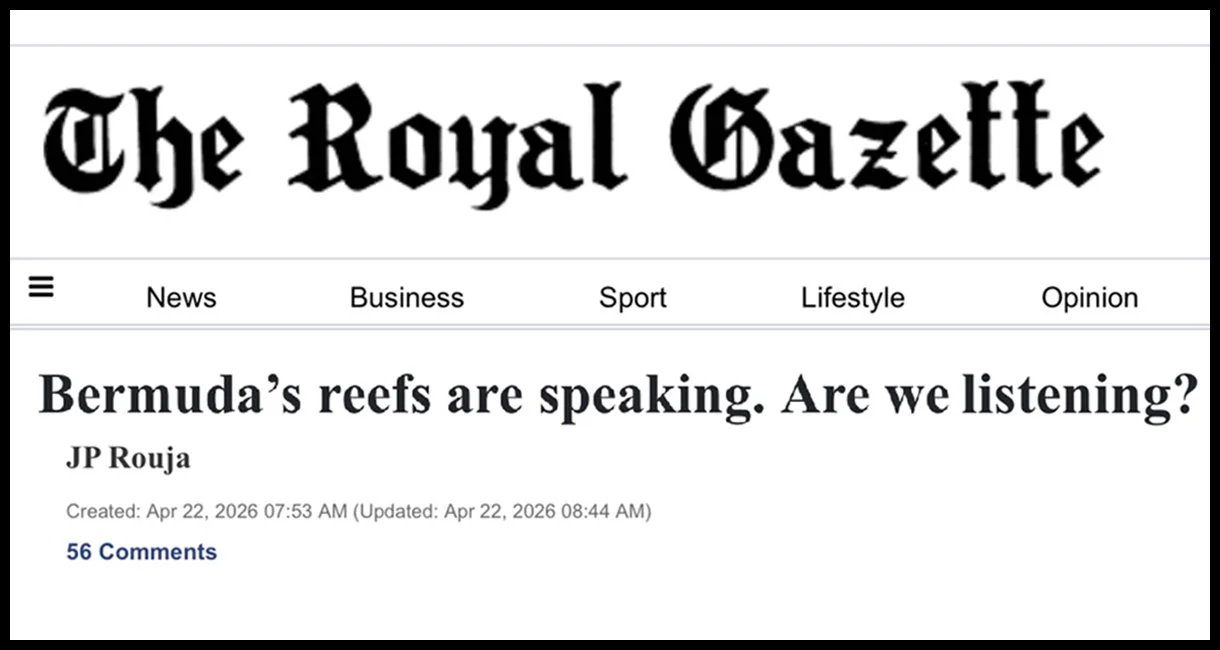
WHERE ARE OUR FISH? Opinion Piece From the Royal Gazette by J-P Rouja

April 23, 2026 JP > Nonsuch Expeditions

REPRINT of Royal Gazette Opinion Piece by Nonsuch Expeditions Founder J-P Rouja

REPRINT of Royal Gazette Opinion Piece by Nonsuch Expeditions Founder J-P Rouja

Bermuda's government has an opportunity to do something historic — to commit to stronger marine protections and secure the future of our ocean for generations to come. I am writing to make the case, simply and directly, that it must seize it.

After I moved back home in 2000, I began organising expeditions for visiting film crews and had the privilege of working alongside some of the world's most renowned marine conservationists. A comment I heard repeatedly from divers who have explored ecosystems across the globe — people such as Sylvia Earle and the Cousteaus — stayed with me: “Nice corals, but where are your fish?”

Read more
Tags Our Ocean
Comment

Where have all our Sharks Gone? Watch “Shark Country”, featuring Teddy Tucker.

April 4, 2026 JP > Nonsuch Expeditions

PLEASE WATCH THIS FILM

One of the starkest examples of change on our reef is the disappearance of the once ubiquitous sharks.

Teddy Tucker has been described as a Bermuda National Treasure. Peter Benchley, author of Jaws and The Deep, described his close friend, Teddy as a walking encyclopedia: 'A master of every discipline having to do with history and the ocean. One of the great autodidacts in the history of science.’

Teddy mused that: ‘a day not spent in the underwater world, a day not spent diving, would seem to me a day lost, wasted and empty’. This love of the ocean was married to a hunger for knowledge, a sharp mind and a photographic memory.

Teddy Tucker, best known as a shipwreck hunter and underwater explorer was first and foremost a fisherman. On a fishing trip in 1994 he was asked for his thoughts on changes he had witnessed over his time fishing off Bermuda. One of the starkest examples of change on the reef is the disappearance the once ubiquitous sharks.

Other fishermen and hunters share their observations of further change they have experienced over the past 30 years. Together with Teddy they stand as witnesses to the decline in Bermuda's marine environment gleaned over years of consistent free diving and scuba diving on the island's reef.

Jean-Pierre Rouja > Nonsuch Expeditions Founder: “The almost complete disappearance of sharks from Bermuda’s eco-system as highlighted in this film, simply can’t be ignored.

Despite all of the ongoing debates regarding how much of, and how best to protect the remaining life that we have left in our waters, there should be no question that we are far worse off now than we were a generation ago.

However, the challenge with personally observing changes in the ocean is that each successive generation has a shifting baseline of what is normal, and even then we don’t always notice gradual changes over time. Whilst those of us who spend time on and under the water will have seen changes within our lifetimes, predominantly for the negative, (though at times positive with recoveries possible when reasonable rules are put in place and enforced), no one can deny the fact that we no longer have sharks on our reefs, along with the cascading impact of losing these Apex predators…

Though obviously not to the same degree, I personally have seen this, which is one of the reasons I am so involved in ocean conservation today. I spent my teenage summers in the late 70’s’s working on one of the last large fishpot vessels, and at the time after hauling up our offshore Argus and Challenger seamount fish pots we often had to speed to the next location to get away from the sharks that were following us for fear that they might accidentally interfere with our gear when we dropped it back over… Even at that time though, we rarely, if ever, saw them on the reef platform.”

* The original post was made in March 2024

Our condolences to the Tuckers for the passing of Edna.


Tags Our Ocean
Comment

Bermuda’s blue parrotfish: Viral United Nations Ocean Conference Campaign

June 23, 2025 LookBermuda
UNOC3-NE-Parrotfish.png
UNOC3 Banner.jpg
IMG_2857-Edit.jpg
IMG_2175-Edit.jpg
IMG_2746-Edit.jpg
UNOC3_youth-Edit.jpg
IMG_2915-Edit.jpg
IMG_2691-Edit.jpg
IMG_3074.jpg
IMG_2939.jpg
IMG_2851-Edit.jpg
IMG_2678-Edit.jpg
IMG_2183.jpg
IMG_2629.jpg

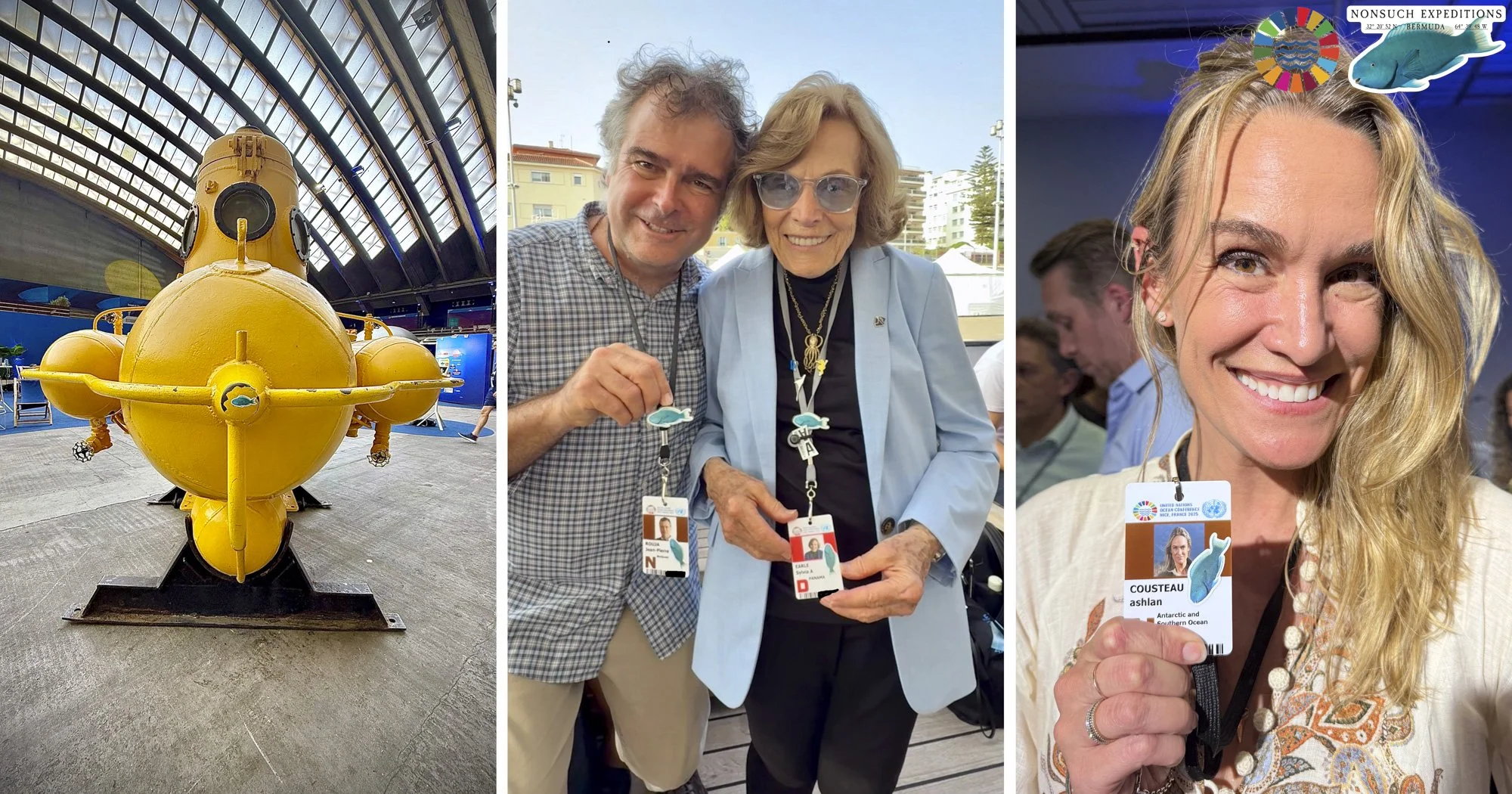
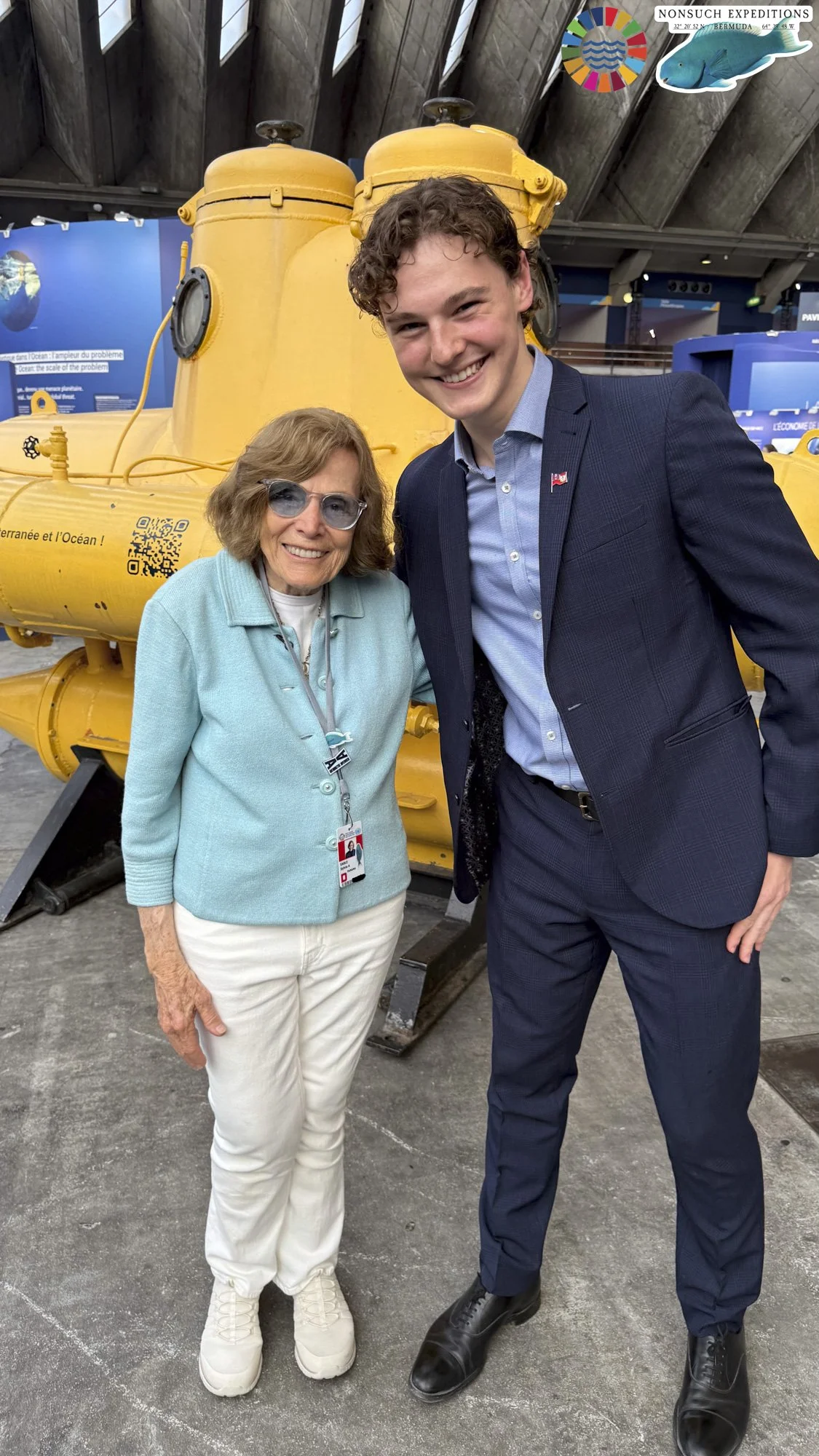
Bermuda’s blue parrotfish were spread virally throughout the United Nations (UN) Ocean Conference in Nice with a message:  Protect the Parrotfish - Protect the Reef

“Several years ago for the UN and other global ocean conferences, I started creating stickers using wildlife photography from the Nonsuch Island Nature Reserve’s flora and fauna to promote Bermuda’s biodiversity.”  J-P Rouja, Nonsuch Expeditions Founder & Media Producer

J-P Rouja & Dr. Sylvia Earle

“One of the most popular images was the blue parrotfish, which I then used to create a small batch of lapel pins. These quickly became a favorite amongst our collaborators and supporters — including ‘Her Deepness’, the legendary ocean researcher and activist, Dr. Sylvia Earle (with whom I am an Ambassador for the Sargasso Sea Commission) — and soon the pins were a collectors item featured on the event lanyards of many iconic conservationists and politicians.

This year, the United Nations Ocean Conference in Nice, France, gathered ocean advocates, scientists, and politicians from over 200 nations. To build on the momentum, I printed a batch of several hundred 1.5” parrotfish stickers to tag the conference ID badges of friends, collaborators, youth leaders, and like-minded conservationists. This proved highly successful and they gained widespread popularity throughout the conference appearing on badges, phone cases and in event-related imagery.

Whilst the blue parrotfish is a stunning image in and of itself, parrotfish have ecological significance in Bermuda and beyond for protecting the reef. In Bermuda, parrotfish are also a conservation and fisheries management success story.

Parrotfish are considered keystone species for coral reef ecosystems, meaning they are critical to the health of the coral and other life. They not only clean algae from corals, keeping them healthy, but they also help produce the fine sand that Bermuda’s beaches are famous for, though natural erosion, calciferous algae, and single-celled organisms called foraminifera, (which makes our sand pink), also play part in that process.

Despite their importance to the health of our reefs, they were routinely caught and sold as filet by the larger commercial fishing operators in the 1970’s and 80’s, prior to the commercial finned fish pot ban.  As the industry scaled up to larger vessels and much larger pots it was decimating key reef species and virtually collapsed the entire reef fish ecosystem. 

Now, some 30+ years after a subsequent fish pot ban, (whilst other types of fishing is still permitted) the ecosystem has yet to recover properly, with many previously targeted species still commercially extinct, and Bermuda has a lower than expected level of fish biomass found on our otherwise relatively healthy reefs.

A common observation, from world renowned ocean experts, the Cousteaus that I hosted here a few years ago is a perfect example who stated after coming up from a dive: “It's nice to see your healthy corals, but where are your fish?”

In the 80s during my early teens, I spent several summers working as a deckhand for one of the worst offenders. Operating from a larger vessel he took the traditional artesian style 3ft x 3ft pots that could be hauled by hand, and scaled them up to long strings of 10ft x 10ft death-trap pots that could ingest whole schools of fish. I can speak from experience that literally everything larger than the holes in the wire mesh, that entered the traps was pulled to the surface and died. If you would want to eat it (i.e., grouper, snapper, etc.) it was cleaned and sold whole. If you wouldn’t necessarily want to eat it (i.e., parrotfish., etc.) it was sold as filet. If it was too small or inedible, it was thrown into a meat grinder and turned into lobster bait. Seeing our reef fish devastated was an experience I shall never forget and part of the reason why I am now committed to advocate for ocean health and develop tools for sustainable fisheries management and ocean conservation.

A few years later, in 1993, alongside the banning of (finned) fishpots, an outright ban on the fishing of parrotfish was put in place. Although unpopular at the time, more than 30 years later Bermuda is seeing the recovery of many species of parrotfish with spawning aggregations being observed for the first time in decades. Some of these are now found schooling in relative abundance on our reef platform, including giant 2 to 3 ft specimens routinely swimming between tourists feet at popular beaches, a sight unheard of in most of the world where they are still targeted as food. 

The Parrotfish is Bermuda’s testament that fisheries management works, but we need to take it further than just focusing on one species and consider our reef eco-systems as a whole. 

Whilst Bermuda is still in the midst of a drawn out process to establish marine protected areas (MPAs), the lessons learned from our historical targeted protection of species, such as the outright ban on catching parrotfish, and seasonal protection of spawning aggregation sites for red hind and black grouper show that our reefs are resilient when given a chance, and species can recover. Yet, there is a tipping point where it is too late for the ocean and specific species to bounce back, (in our case several species of once abundant grouper, like the Nassau, never recovered), which is why it’s important for us to take further action to protect our reefs worldwide.

In the case of the parrotfish, their recovery is arguably one of many factors why our reef remains relatively healthy (despite the general lack of fish) as their continuous grazing helps keep the algae in check which can otherwise stress a reef, and during extreme events can overwhelm corals before they have time to recover.

It is therefore my humble opinion and suggestion that we should work to protect our reefs as a whole, in a way that is implemented and enforced. And where this is not possible, then at the very least, spawning aggregations should not be targeted, and protecting parrotfish and other grazers should be considered.” 

*These are personal opinions based upon decades of observations in Bermuda. I fully appreciate that these are complex issues, and there may be locations where excessive grazing by parrotfish negatively impact corals when they in turn are not kept in check by apex predators such as sharks. However, this shows a larger imbalance to the health of our reefs, that we should work together to restore.

Protect the Parrotfish - Protect the Reef.

J-P Rouja | Founder > Nonsuch Expeditions | Co-Founder > BioQuest & Station-B

Tags Our Ocean
Comment

‘Ocean with David Attenborough’ Premiered Ahead of United Nations Ocean Conference

June 9, 2025 JP > Nonsuch Expeditions
BUEI_screening_Jun_4_2025_-264.jpg
BUEI_screening_Jun_4_2025_-174.jpg
BUEI_screening_Jun_4_2025_-356.jpg
BUEI_screening_Jun_4_2025_-299.jpg
BUEI_screening_Jun_4_2025_-292.jpg
BUEI_screening_Jun_4_2025_-289.jpg
BUEI_screening_Jun_4_2025_-285.jpg
BUEI_screening_Jun_4_2025_-366.jpg
BUEI_screening_Jun_4_2025_-363.jpg
BUEI_screening_Jun_4_2025_-359.jpg
BUEI_screening_Jun_4_2025_-361.jpg
BUEI_screening_Jun_4_2025_-343.jpg
BUEI_screening_Jun_4_2025_-328.jpg
BUEI_screening_Jun_4_2025_-332.jpg
BUEI_screening_Jun_4_2025_-318.jpg
BUEI_screening_Jun_4_2025_-308.jpg
BUEI_screening_Jun_4_2025_-303.jpg
BUEI_screening_Jun_4_2025_-276.jpg
BUEI_screening_Jun_4_2025_-126.jpg
BUEI_screening_Jun_4_2025_-118.jpg
BUEI_screening_Jun_4_2025_-90.jpg
BUEI_screening_Jun_4_2025_-67.jpg
BUEI_screening_Jun_4_2025_-59.jpg
BUEI_screening_Jun_4_2025_-40.jpg
BUEI_screening_Jun_4_2025_-305.jpg
BUEI_screening_Jun_4_2025_-249.jpg

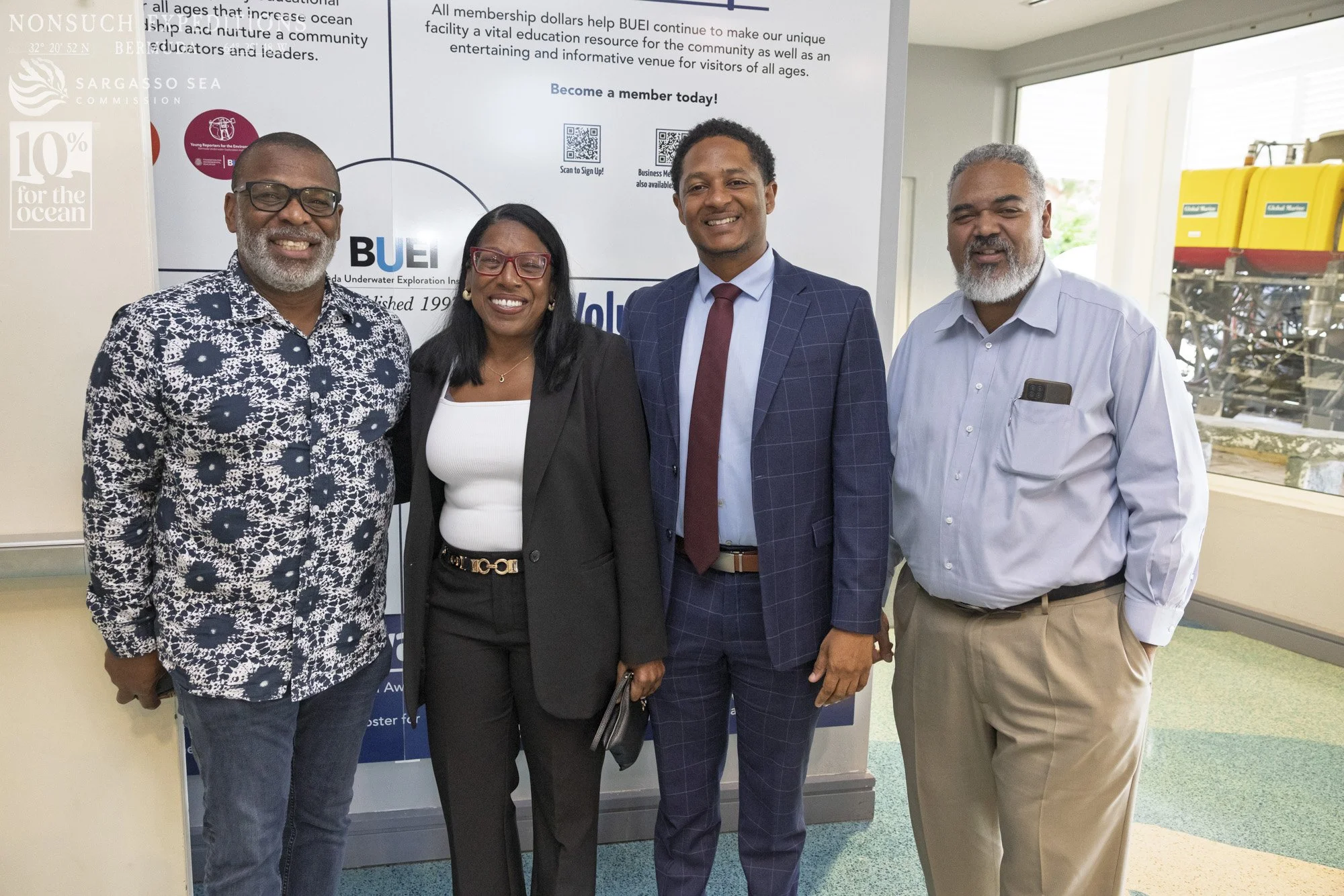
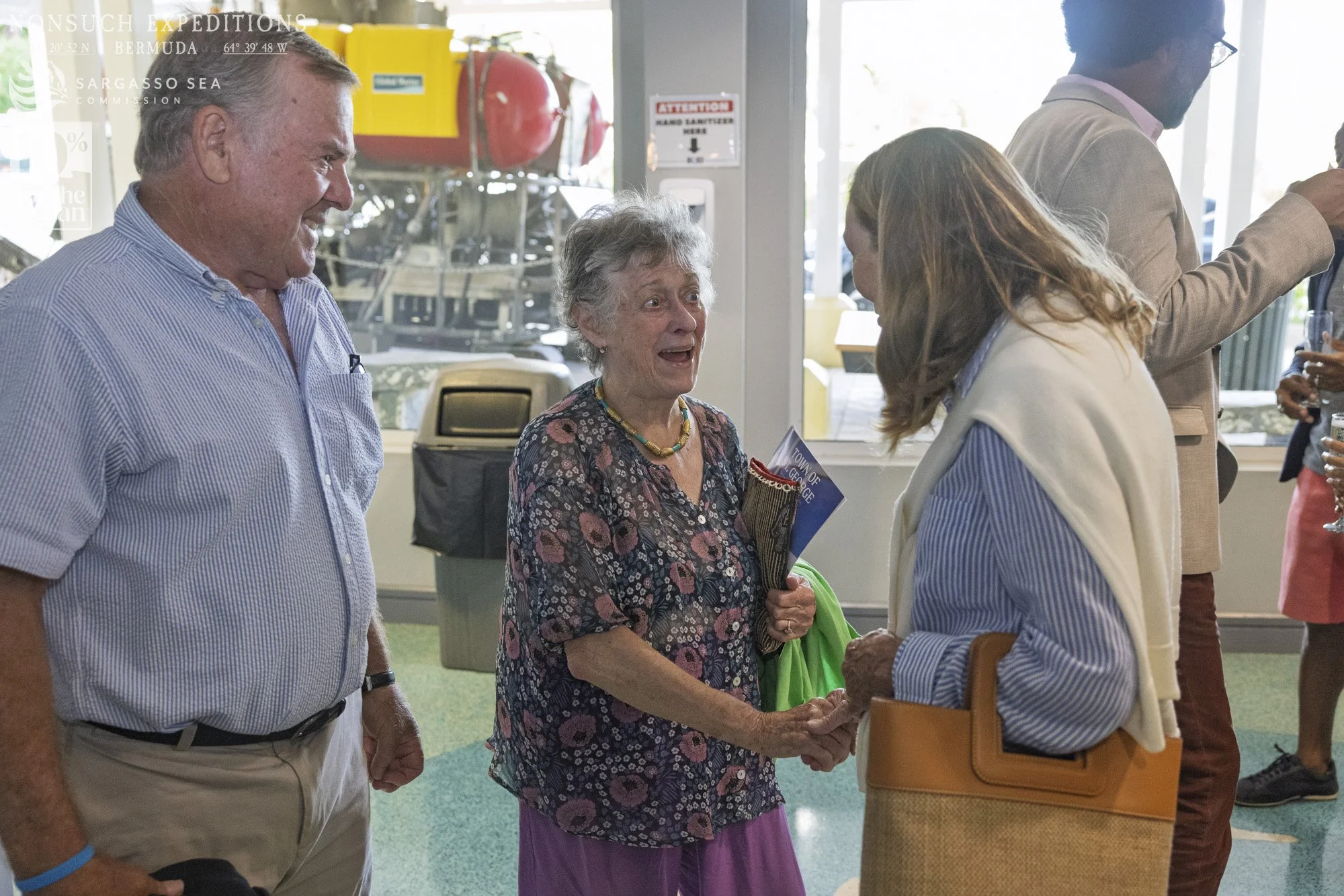
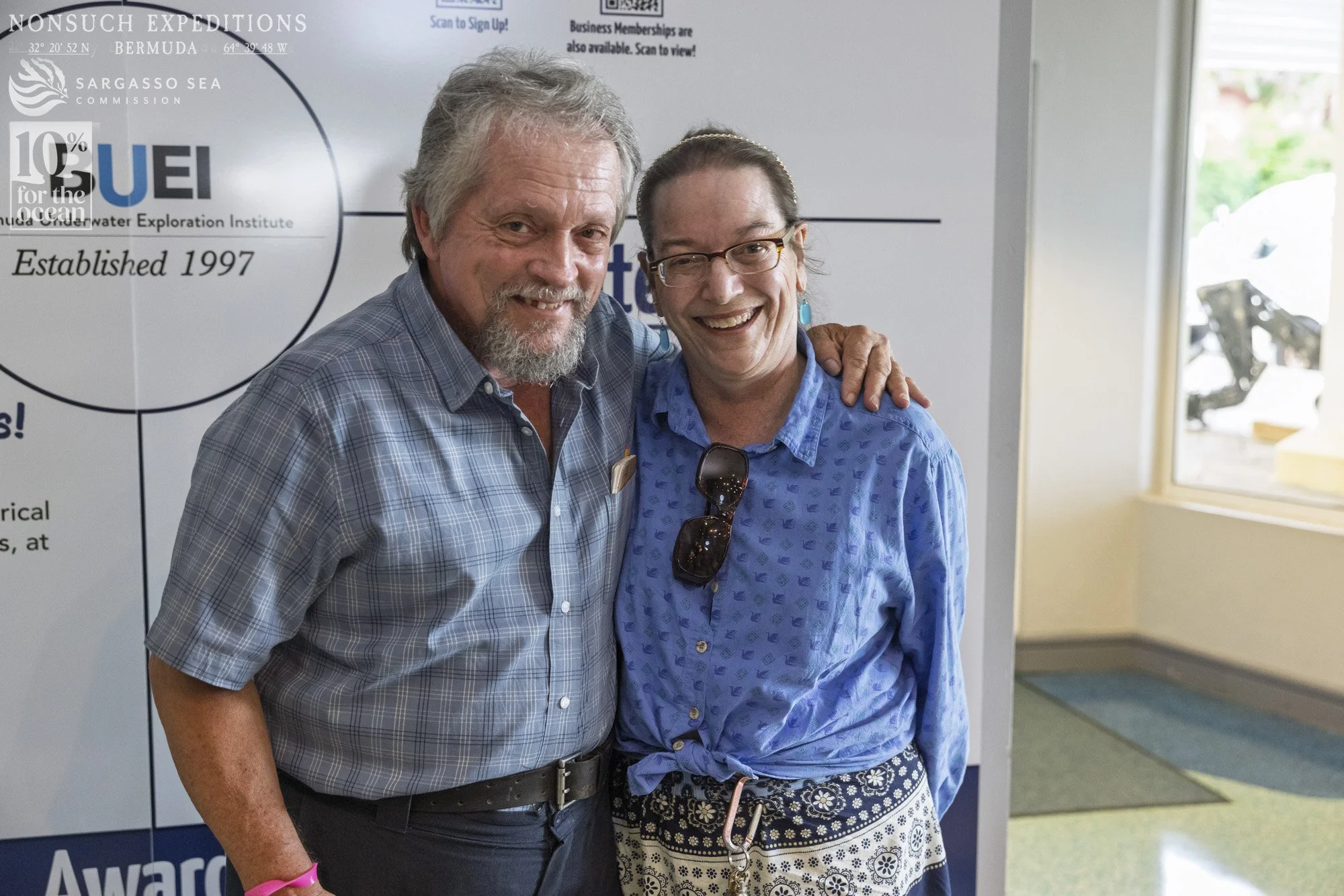
Bermuda’s ocean champions gathered last week for the Bermuda premiere of Ocean with David Attenborough, hosted as a private event by The Nonsuch Expeditions and presented by 10percent for the Ocean and the Sargasso Sea Commission at the Bermuda Underwater Exploration Institute. 

The event drew a full house, with many prominent figures from Bermuda’s marine conservation, scientific research, and advocacy communities. Among the distinguished guests were government officials and dignitaries, including the Hon. Jaché Adams, JP, MP, Minister of Public Works and the Environment; the Hon. Kim Wilkerson, JP, Attorney-General and Minister of Justice; the U.S. Consul General Antoinette Hurtado, and the acting Deputy Governor.

"It was a privilege to attend this important screening and engage with others committed to protecting our ocean as marine conservation remains a priority for the Government,” said the Hon. Jaché Adams, JP, MP, Minister of Public Works and the Environment. “I want to thank all of the organisers and sponsors for their efforts and look forward to working collaboratively to help ensure the sustainable use of Bermuda’s marine resources for generations to come," 

“This vital film has been four years in the making and reflects the collective effort of hundreds of people working together to spark a profound shift in how we protect the ocean,” said Jasper Smith, founder of 10% for the Ocean, one of the film’s producers. “It is a sobering truth that we spend 100 times more on ice cream than we do on ocean conservation. Through 10% for the Ocean, we’re calling on individuals, businesses and foundations to take the 10% pledge — by committing just 10% of your annual giving to the ocean, we can end the most destructive forms of fishing, restore marine ecosystems, and bring the ocean’s former abundance back to life.” 

Jean-Pierre Rouja, founder of The Nonsuch Expeditions, had previous experience working with Doug Anderson, director of underwater photography for ’Ocean’, as well as co-producer Silverback Films. In 2015 the team worked together in Bermuda for a month to produce a Sargasso Fish sequence for the BBC Natural History Hunt series — which was also narrated by David Attenborough.  “We spent nine months of prep work and several weeks of filming to secure the three minutes of footage that made its way onto the screen, which is quite common for productions like this,” said Rouja. “We have also joined the 10% for the Ocean effort, as their mission aligns with ours, and should be seriously considered by the Bermuda philanthropic community.”

“The message is clear: the ocean's health is essential to the health of the planet,” said Dr. David Freestone, executive secretary of the Sargasso Sea Commission. “We know the threats, and we know that tools like area-based management can help. Now it is up to us to collaborate and put measures in place to ensure these iconic areas keep functioning as they should.”

The screening was also a timely opportunity to highlight Bermuda’s commitment to ocean stewardship ahead of the upcoming UN Ocean Conference in Nice, France (June 9–13) and was followed by an engaging panel discussion with local ocean science experts. 

Panel speakers included Dr. Mark Guishard, COO of ASU-BIOS; Jean-Pierre Rouja, founder of Nonsuch Expeditions, co-founder of BioQuest and Station-B; Jessica Mello, blue economy expert at Blue Bridges; and Fae Sapsford, marine research fellow for the Sargasso Sea Commission. The panel was moderated by Ali Hochberg, sustainability consultant and responsible tourism specialist. 

Discussions centred around: 

  • Bermuda’s history of important contributions to ocean and atmospheric science. Using decades of oceanographic measurements collected by time-series programs run by ASU-BIOS, we have increased our fundamental understanding of baselines conditions in the ocean, the ocean’s role in the climate system, and how the ocean is responding to a changing global climate.

  • Development and application of cutting-edge ocean science technologies. Recent examples include passive acoustic sensors for monitoring and protecting marine species; specialised modular sensors for coral reef assessment and management; and environmental DNA (eDNA) sampling and sequencing in partnership with local non-profit BioQuest.

  • The potential for growth in Bermuda’s blue economy. Blue economy industries such as marine tourism, renewable energy, and food production can be further developed in Bermuda through targeted investments in technology, data, and finance, along with the implementation of strong legal and regulatory frameworks to protect vital ocean resources.

  • Tools for ocean protection. Marine protected areas are regions of the ocean set aside for long-term conservation aims. There are a variety of other area based tools for ocean protection, such as the scientific designation of ‘important marine mammal areas’ that highlight critical habitat for cetaceans (whales, dolphins, and porpoises), which can be used as a starting point for the discussion of conservation measures. 

  • Protecting marine life in the open ocean. The Biodiversity Beyond National Jurisdiction (BBNJ) agreement is a recently adopted international treaty with the objective to conserve and sustainably use marine biological diversity in areas beyond national jurisdiction, including the Sargasso Sea — where the Bermuda Government is playing a leading role in conservation through its ongoing collaboration with the Sargasso Sea Commission.


The event was sponsored by Butterfield & Vallis, The Loren, and conservation patrons Brining and Lampit, and presented by 10% for the Ocean — one of the film’s producers in collaboration with the Sargasso Sea Commission, with support from The Nonsuch Expeditions


Tags Our Ocean
Comment
Blog > 2025/26 Season
WHERE ARE OUR FISH? Opinion Piece From the Royal Gazette by J-P Rouja
about 2 weeks ago
No results found
Subscribe to our Newsletter for CahowCam Alerts

Our current conservation technology Development partners:


This WEBSITE and the Ongoing Expeditions are A

lookbermuda | LookFilms | Lookinteractive proJECT

and are under ONgoing Development

PRIVACY STATEMENT


BIG Thanks to Digicel for this season’s internet access!


With the Support oF our Art and Expedition Sponsors and


SSC_V.png
SeaKeepersLogo150.png